TL;DR
Build one HMI framework for two radically different brands — a UK luxury marque and an Indian mass-market bike — without either feeling like a compromise.
Two brands.
One system.
A motorcycle consortium brought together two very different brands under one brief: build a single HMI framework that serves both. A UK luxury marque — weekend rides, crafted experiences, restrained technology. An Indian mass-market brand — daily commuting, digital-native riders, features as value.
The complexity wasn't technical. It was philosophical. How do you build one system that feels completely native to both, without either brand feeling like a compromise? The complexity centered on building a single, robust framework and design system that served as the shared DNA for both brands, while simultaneously allowing for deep-level customisation.
TL;DR
Two countries, two rider cultures, two definitions of premium. Research revealed a fundamental cultural tension that shaped every design decision that followed.
Two countries.
Two realities.
We ran discovery workshops in India and roadmap sessions in the UK — then brought it together in Poland. The research revealed a fundamental cultural tension at the heart of the brief.
In the UK, motorcycle ownership is predominantly leisure-driven. The bike is a weekend escape, a status object, a considered purchase. In India, two-wheelers are the primary form of personal transportation for a significant portion of the population. The bike is how you get to work.
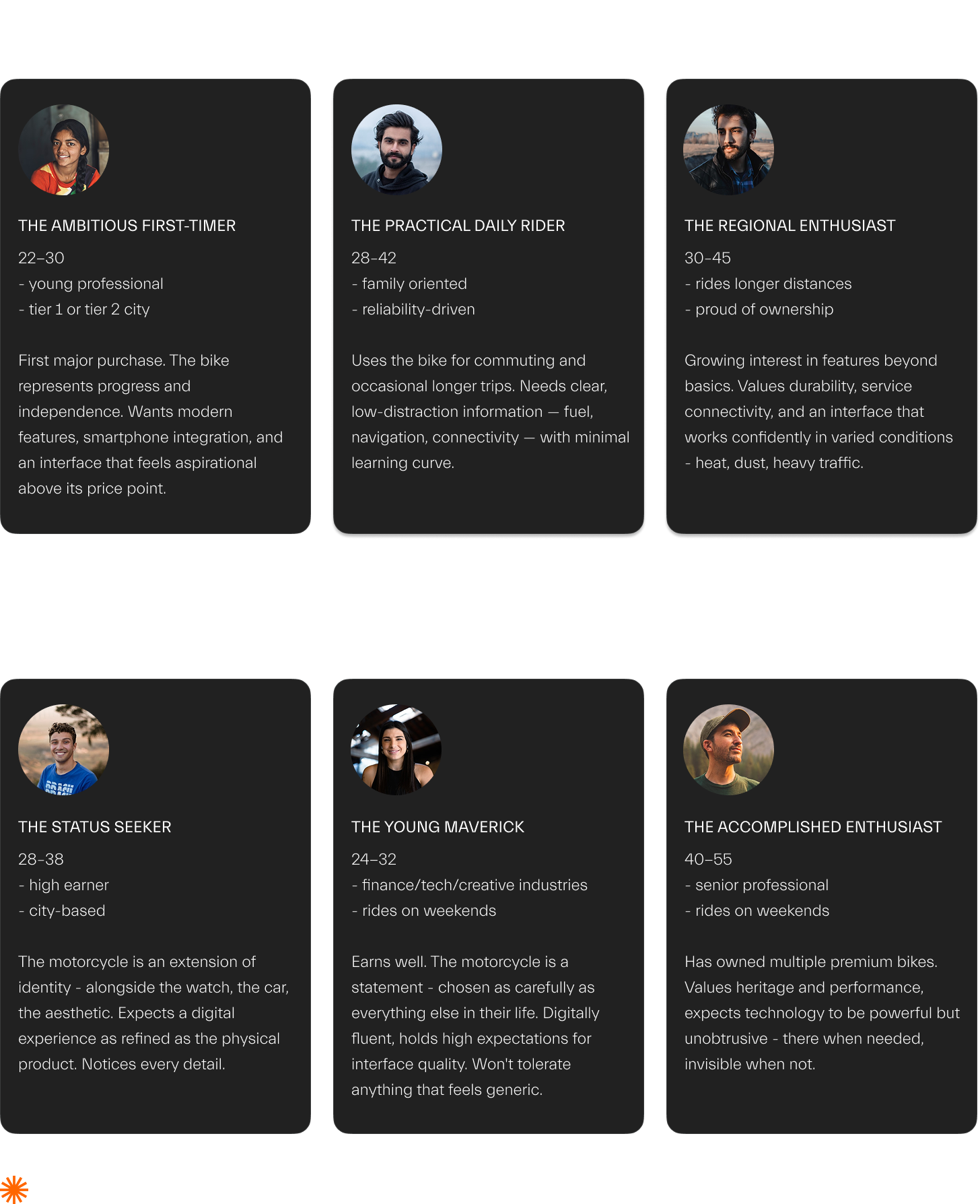
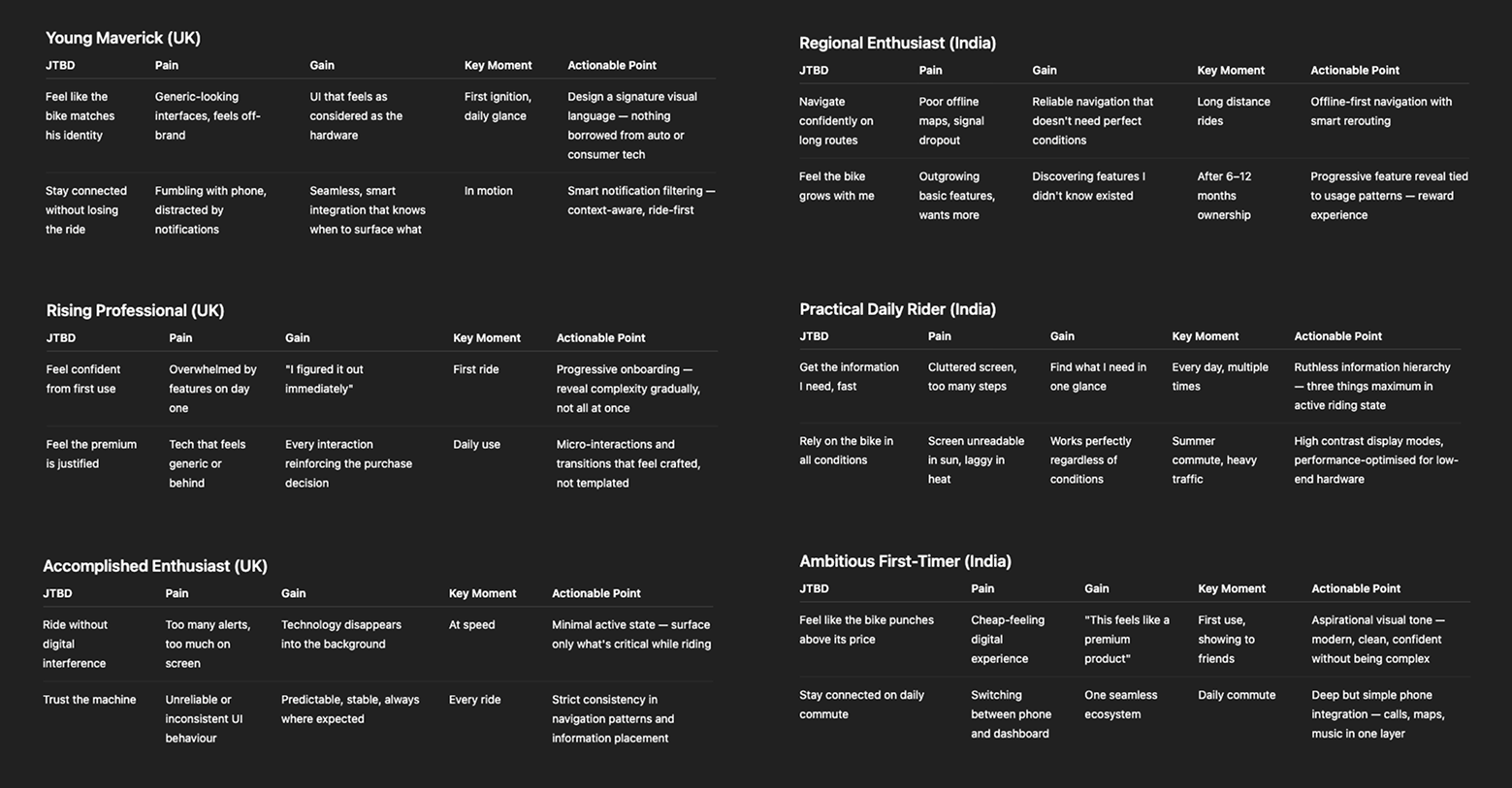
The AI-augmented process helped us move fast. NotebookLM synthesised research reports and competitive benchmarks. GPT helped build and pressure-test personas. Marketing segments tell you who opens their wallet — personas tell you why. The human work was strategy; the AI handled compression.
TL;DR
AI embedded as a thinking partner — not a shortcut. From research synthesis to stakeholder presentations, it accelerated the work and elevated the conversations.
AI as a
design collaborator.
This design project was an experiment in working differently. AI was embedded at every stage, not as a shortcut, but as a thinking partner.
Our HMI Design Consultant proved to be valuable beyond the design process itself. When presenting to stakeholders, we could back every decision with relevant data, market statistics, and technical context - pulled quickly without interrupting the workflow. Stakeholders responded well to the evidence-led approach, and it elevated the conversations from design reviews into strategic discussions. It was one of those moments where AI visibly improved the process - not in theory, but in the room, in real time, shaping how the project moved forward.
TL;DR
One shared design system as the base, brand-specific layers diverging from it. Raw XML specs mapped into a full information architecture — then into wireframes.
One DNA.
Two expressions.
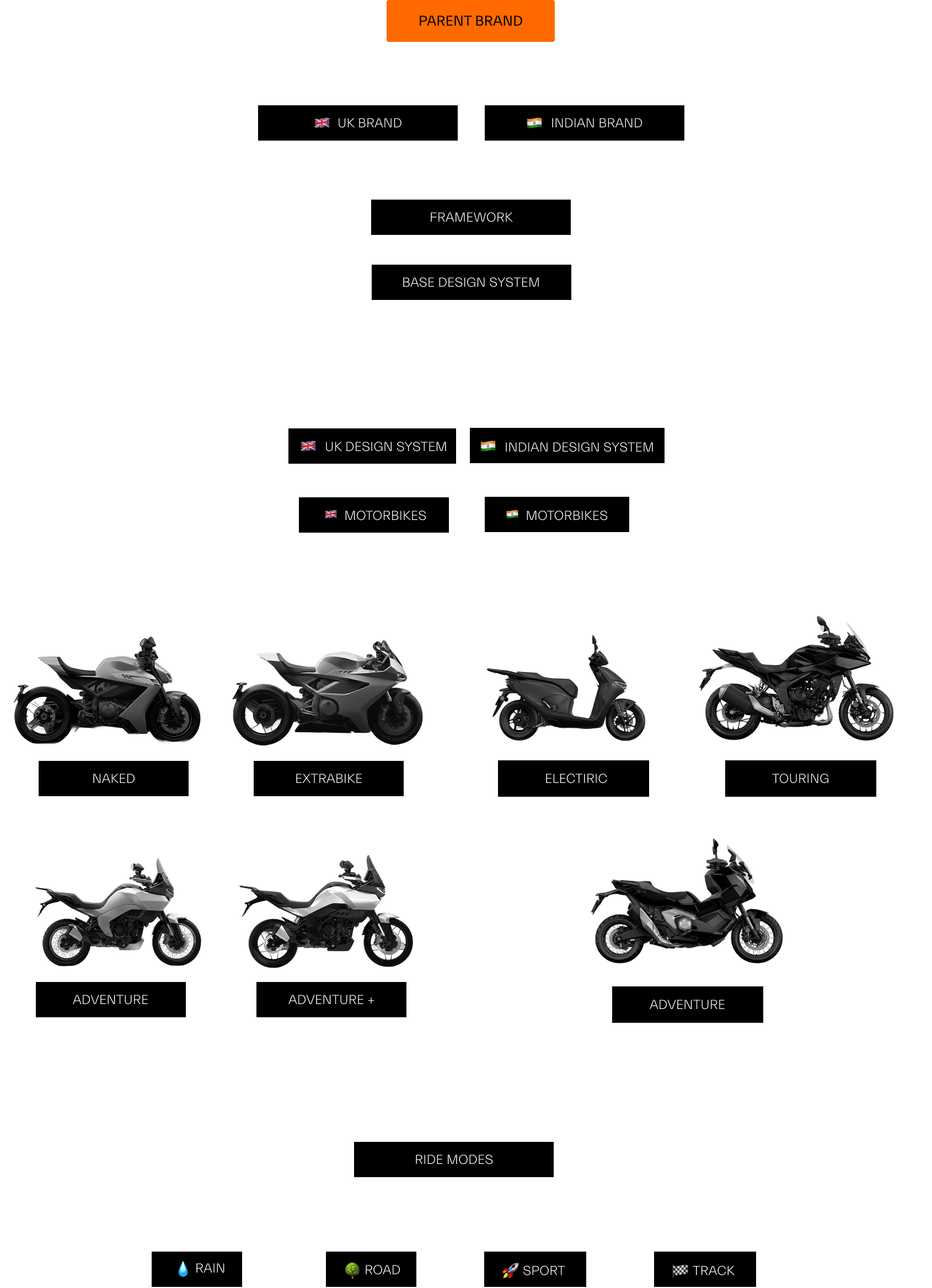
The solution was architectural. Build one base design system — a shared foundation of components, tokens, interaction patterns, and navigation logic. Then let each brand diverge from it.
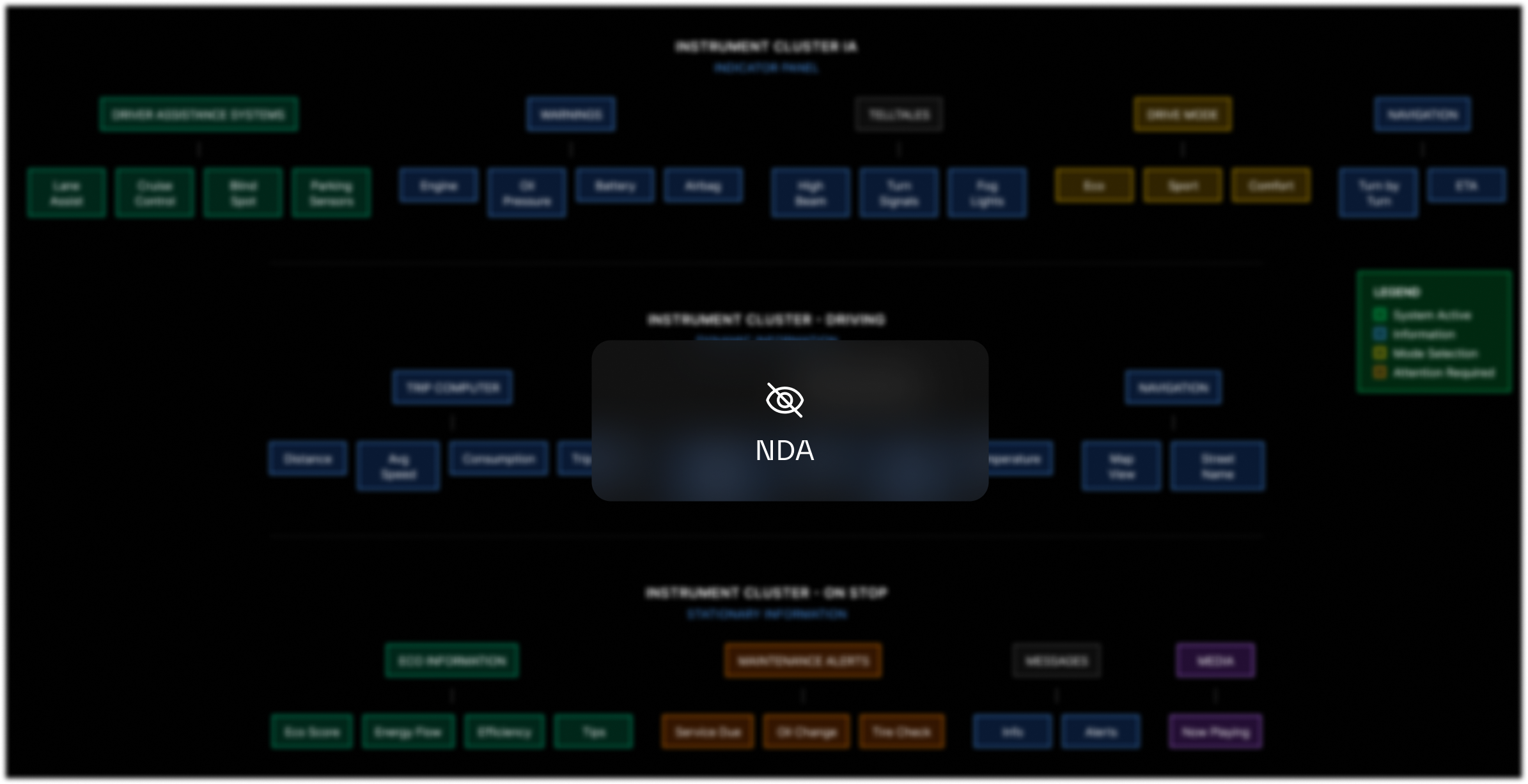
Each brand delivered detailed XML files outlining every feature required in the system - a dense, technical specification that needed to be untangled before any design work could begin. From those files, I mapped the full information architecture: organising features into logical hierarchies, defining relationships between screens, and establishing navigation patterns that would work across both brands and both markets.
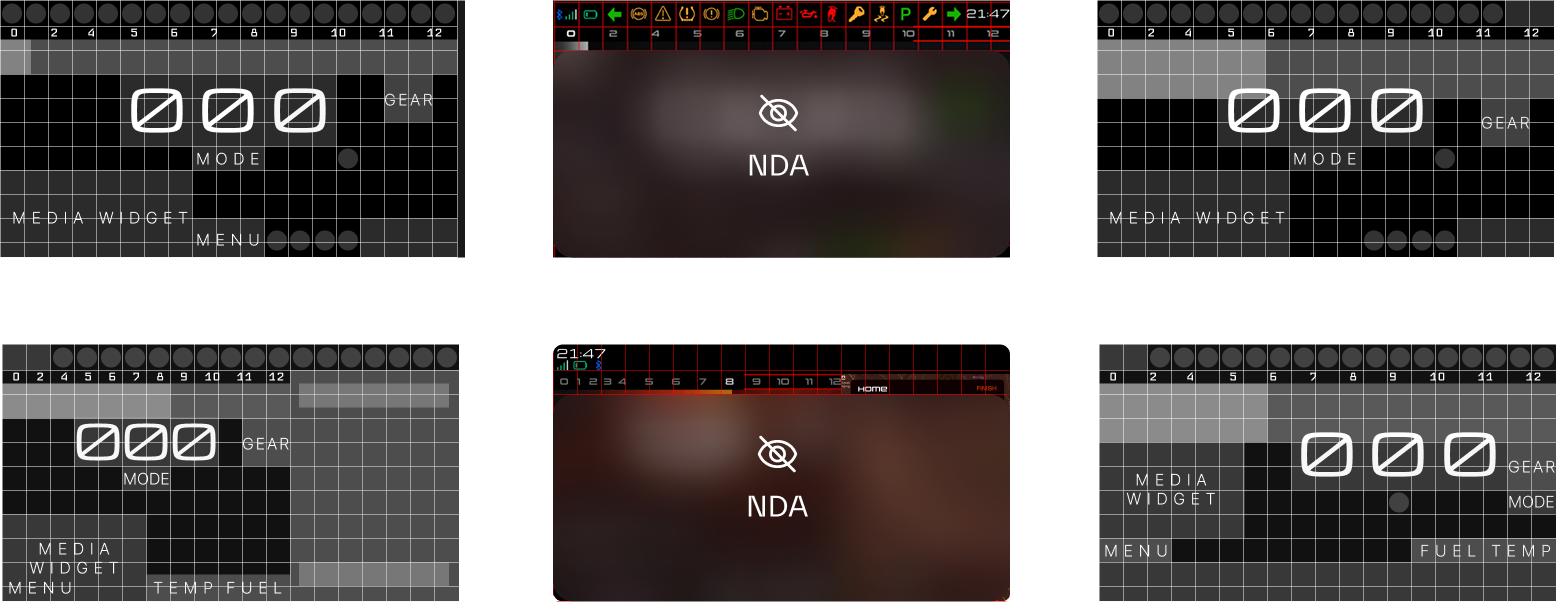
The wireframes translated IA logic into layouts for different motorcycle segments. This skeletal foundation was used to validate ergonomics and user journeys before the UI design began. We also established core logic for UI availability and safety, ensuring critical information is always accessible and distraction-free while riding.
TL;DR
Two parallel workstreams. I led the UK brand — translating abstract artistic direction into a screen-based experience through close stakeholder collaboration and craft.
One team.
Two directions.
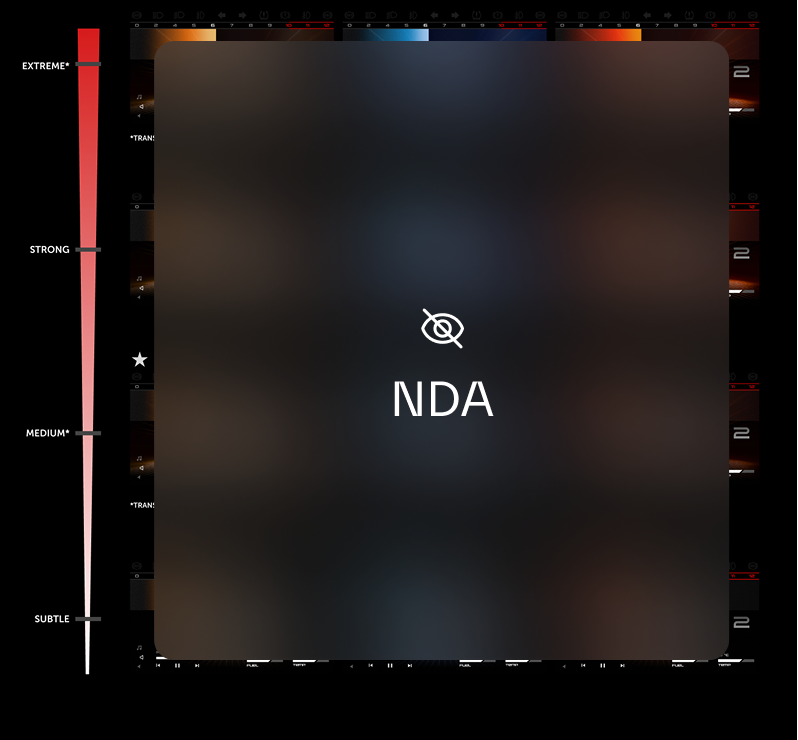
Once the base wireframes were complete, the team split into brand-specific workstreams. I took ownership of the UK brand — leading the artistic direction and acting as the main point of contact with the client's stakeholders.
The UK stakeholders knew what they wanted. They had a strong vision, a clear sense of identity, and high expectations — but translating that into a screen-based experience was the challenge. Some directions were abstract, almost purely artistic. We went through several rounds of alignment, working to capture something that felt right before it could be defined. That kind of brief demands a different design muscle — less systems thinking, more craft and intuition.
TL;DR
One design system, two brand modes. A deliberate DesignOps decision to build a single scalable foundation — not two parallel systems that would drift apart over time.
One foundation.
Infinite expression.
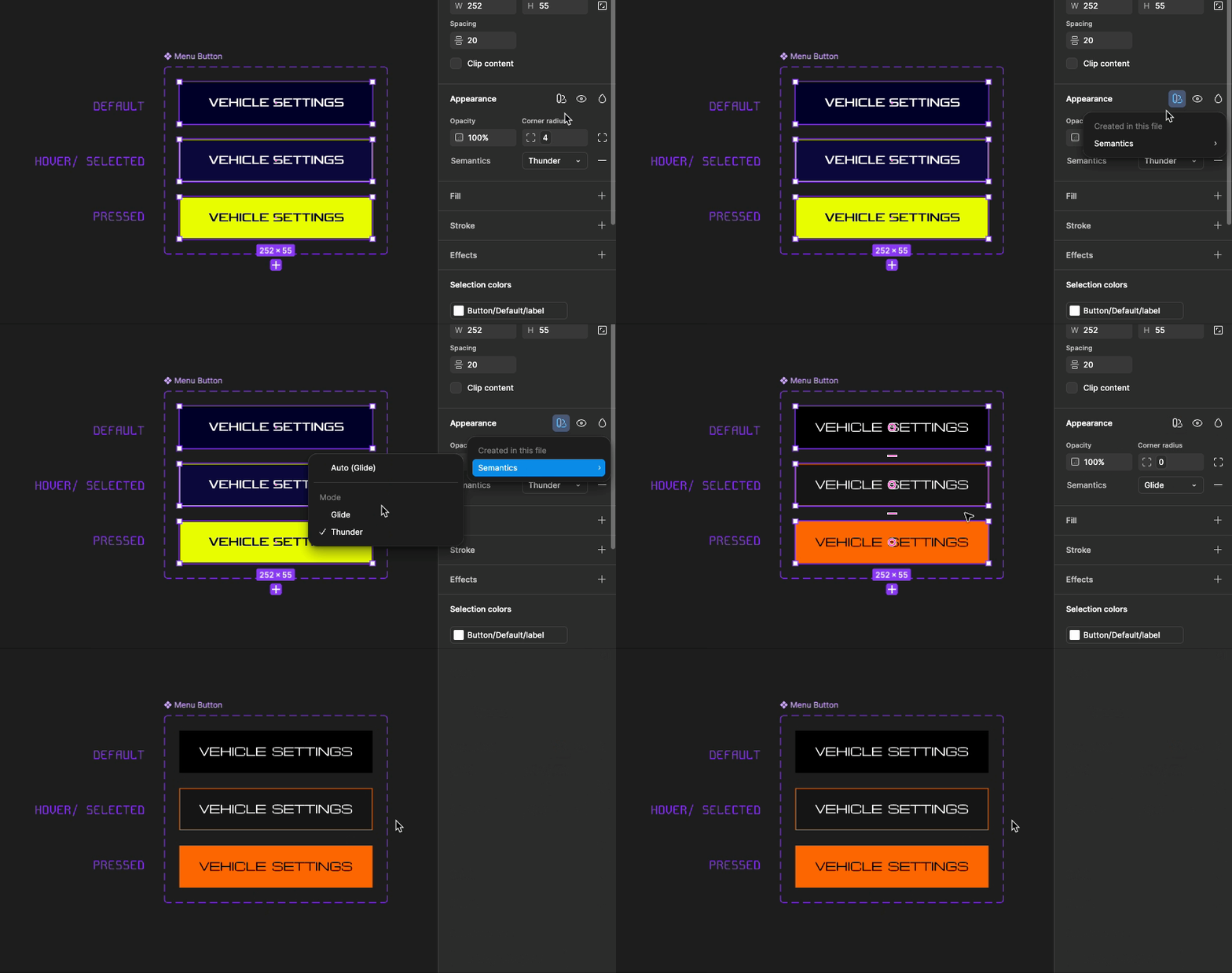
Once visual direction for both brands were developed, we aligned on creation of one design system with modes, for handling the base of the design system. Rather than building two separate design systems in parallel — which would have created duplicated maintenance effort over time — we made a deliberate DesignOps decision to establish a single shared foundation.
Indian Brand was designed first and served as the base system. Its component library and variable architecture were built with multi-brand scalability — every component was connected to semantic design tokens rather than hardcoded values.
TL;DR
Dzięki obszernemu procesowi discovery i wiedzy — ekrany zostały zaprojektowane z niezwykłą dbałością o każdy element, aby spełnić surowe warunki designu motocyklowego HMI.
Designed for
100km/h.
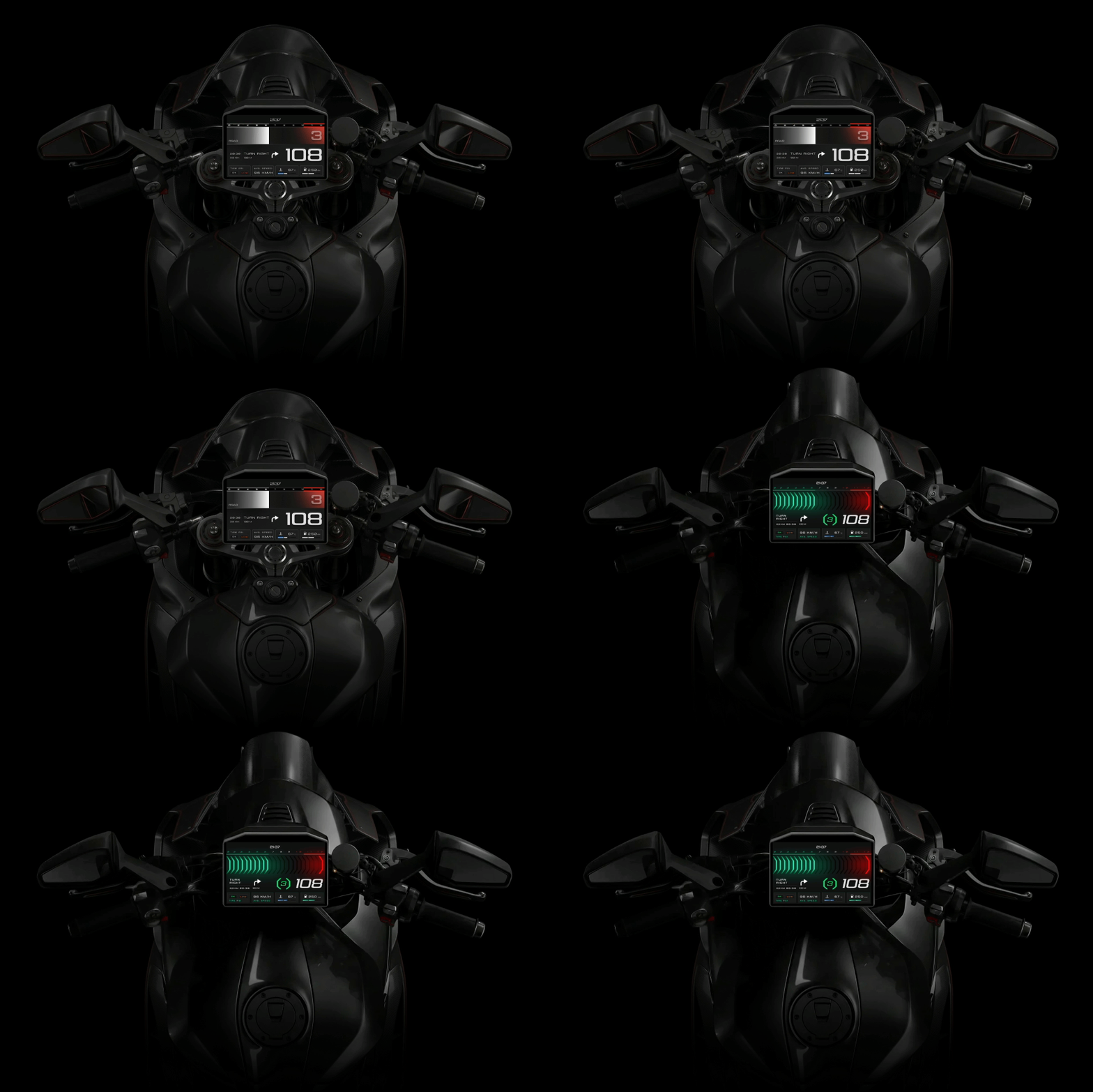
The instrument cluster is where HMI gets real. Every decision — type scale, contrast ratio, element placement — has to hold up when the rider is doing 100km/h, vibrating on a seat, with rain on their visor.
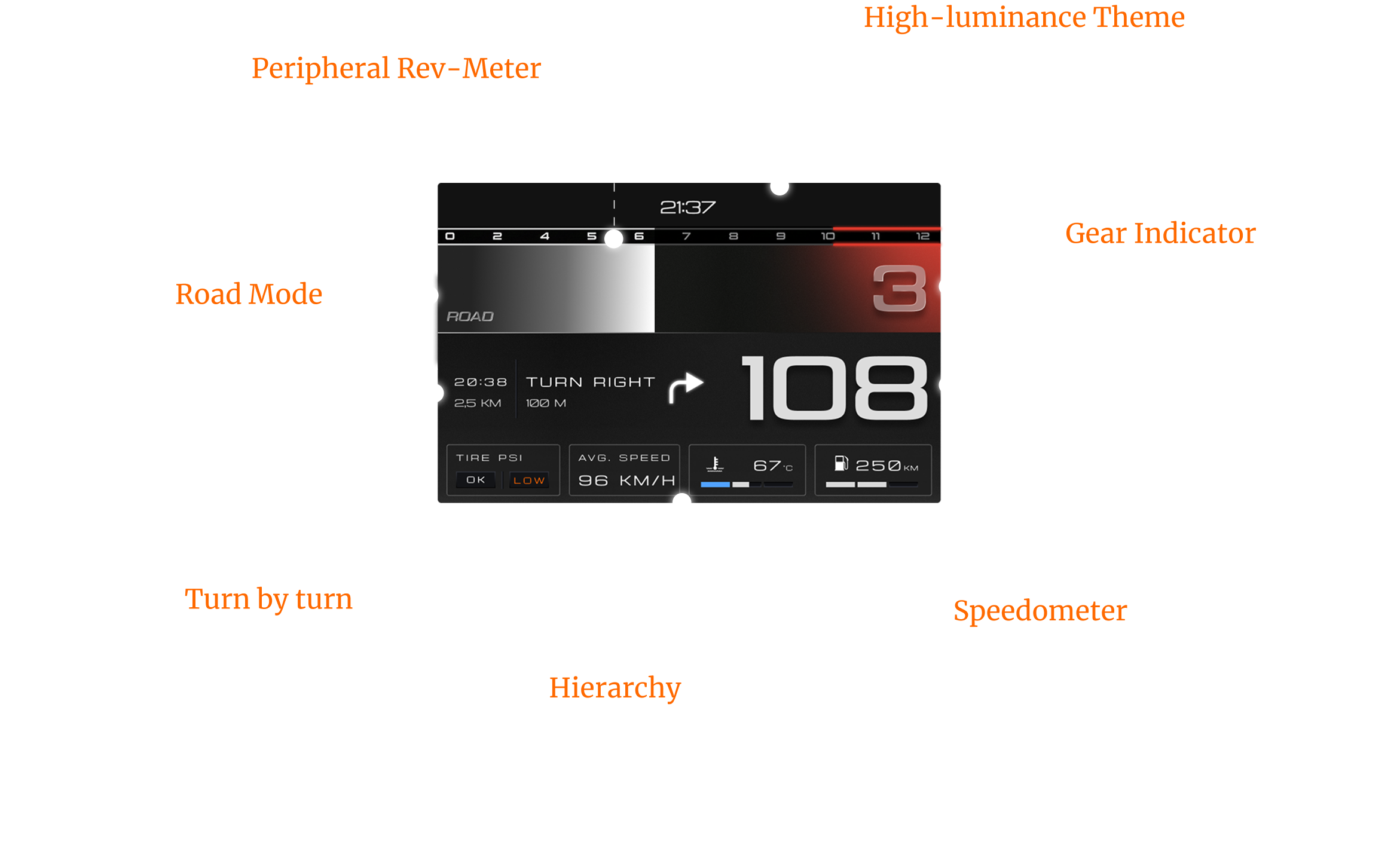
Robust research and knowledge led us to create a screen that emphasises glanceability, and peripheral legibility, high contrast and design that is strong and clutter-free.
TL;DR
AI was embedded in how the work got done. From research to stakeholder rooms, it made the process faster, sharper, and more strategic.
Not a tool.
A way of working.
Introducing AI into a complex, multi-brand design project isn't just about picking the right tools — it's about knowing where human judgment ends and where machine efficiency begins. On this project, I built a workflow that used AI at every stage without losing design ownership or strategic clarity.
Research & Synthesis. NotebookLM processed dense research reports, competitive benchmarks, and brand documentation — surfacing patterns and contradictions that would have taken days to map manually. This compressed the discovery phase without sacrificing depth.
Persona Development. GPT was used to build and stress-test personas based on qualitative insights from workshops in India and the UK. The AI provided a fast starting point; the human work was interrogating those outputs and pushing them until they felt true, not just plausible.
Stakeholder Communication. An AI-powered HMI Design Consultant was integrated into the presentation workflow. When stakeholders asked questions about standards, technical constraints, or market context, we could pull precise, relevant answers in real time — without breaking the conversation. This shifted meetings from design reviews to strategic discussions.
Documentation & Handoff. AI-assisted documentation ensured the design system could be articulated clearly and consistently — especially important when the same framework had to speak to two different client teams with different vocabularies and priorities.
The Skill
Knowing which parts of the process benefit from AI acceleration — and which demand human judgement — is itself a design skill. The value isn't in using AI. It's in using it well.
TL;DR
UX process and research artifacts created during this phase - research documentation, wireframes on grids, shared design system, two brand design language, mockups ready for dev handoff.
Project completed.
Delivered end-to-end.
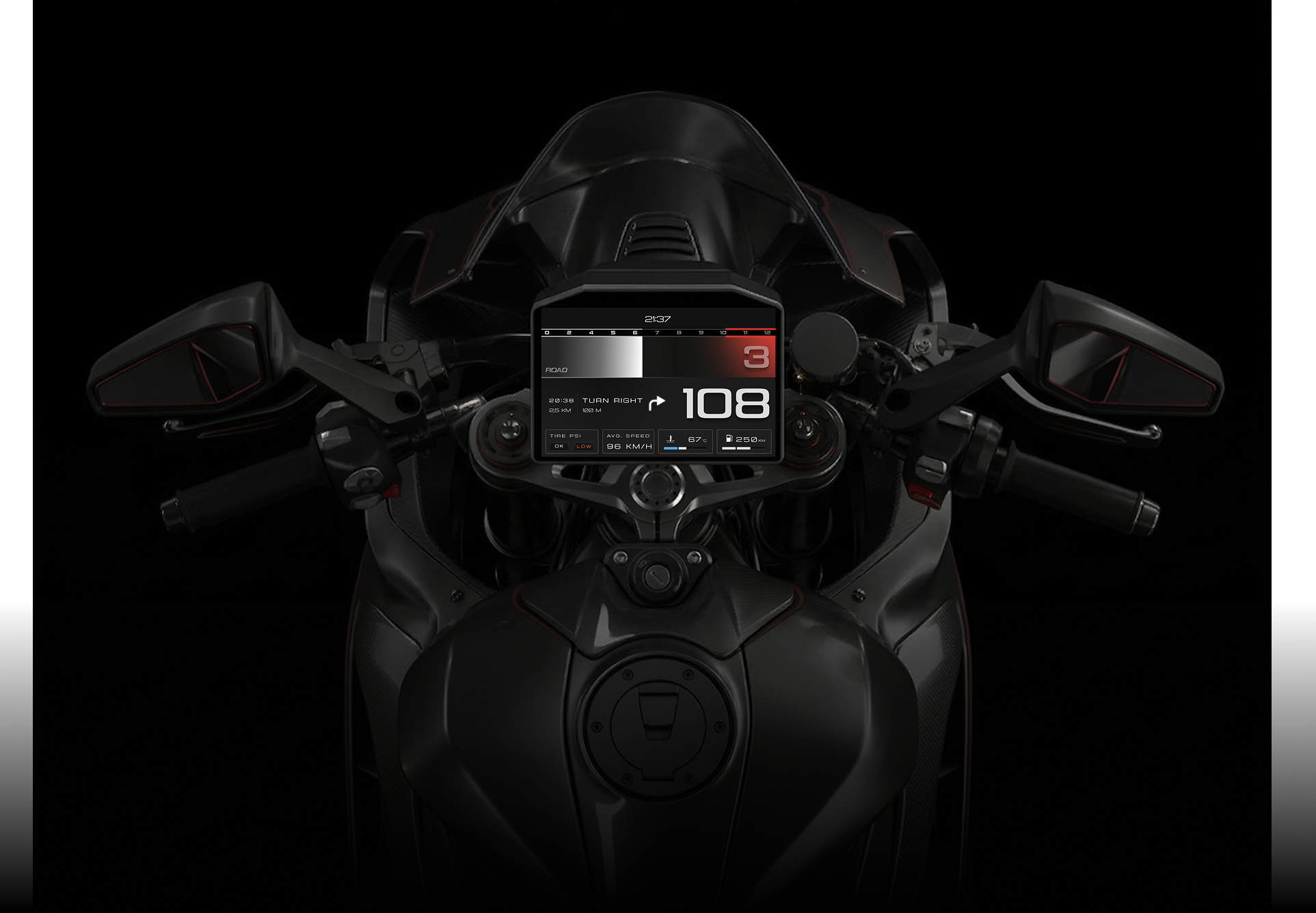
The project delivered a complete HMI guide for the connected motorcycle consortium — a living document that gave both brands a shared language and the freedom to speak it differently.
The AI-augmented approach meant we moved faster through discovery, kept synthesis tight, and let the design conversations happen at a higher level. The process slowed briefly when Jaguar launched their controversial rebrand — a reminder that brand decisions made outside the room can land in your brief overnight.
The real thing.
Two completely different motorcycle brands — UK luxury and Indian mass-market — built from one shared DNA.